
Work a Gallup Street Directory Search
Start an address-led Gallup question with the location, not a name. The USPS ZIP Code Lookup can help confirm the written delivery address. Enter the normalized situs address in McKinley County EagleWeb, retain the account ID, parcel number, legal description, and the displayed as-of date, then take those identifiers to the McKinley County Clerk when a recorded instrument is needed. A Gallup public tax account is a lead. The Gallup Clerk holds the recorded document trail.
- Keep the Gallup address as supplied, then separate the house number, directional, street name, street type, and unit. Check the delivery spelling before changing any part of it.
- Use the McKinley County EagleWeb tax-account search by situs address. Save the account, parcel, legal description, and result date rather than assuming the owner field settles title or occupancy.
- Compare the address with City of Gallup Web Maps or McKinley County GIS context. Road, boundary, zoning, and address-point layers answer location questions, not ownership questions.
- Ask the McKinley County Clerk to search the applicable recorded-document index using the parcel, legal description, names, document type, and bounded date range. Confirm copy or certification charges before ordering.
- For a dated household clue, ask Octavia Fellin Public Library staff about historic directories or address materials. A historical listing is dated evidence, not current contact information.
New Mexico's voter self-service channel is not a walk-the-block tool. It is designed to return a requester's own election information, not a public street roster.
Use EagleWeb for Gallup Street Records
McKinley County's public EagleWeb portal is the practical online bridge from a Gallup street address to taxable-account context. Guest access is free after the public login. The portal describes prior-year assessed values, taxes, charges, payment history, situs address, legal description, and account material for Gallup-area taxable property. It directs current-year valuation questions to the Assessor, so the page should be read as a tax-account display rather than a current title certificate.
The McKinley County Assessor page describes the taxable roll and its EagleWeb connection.
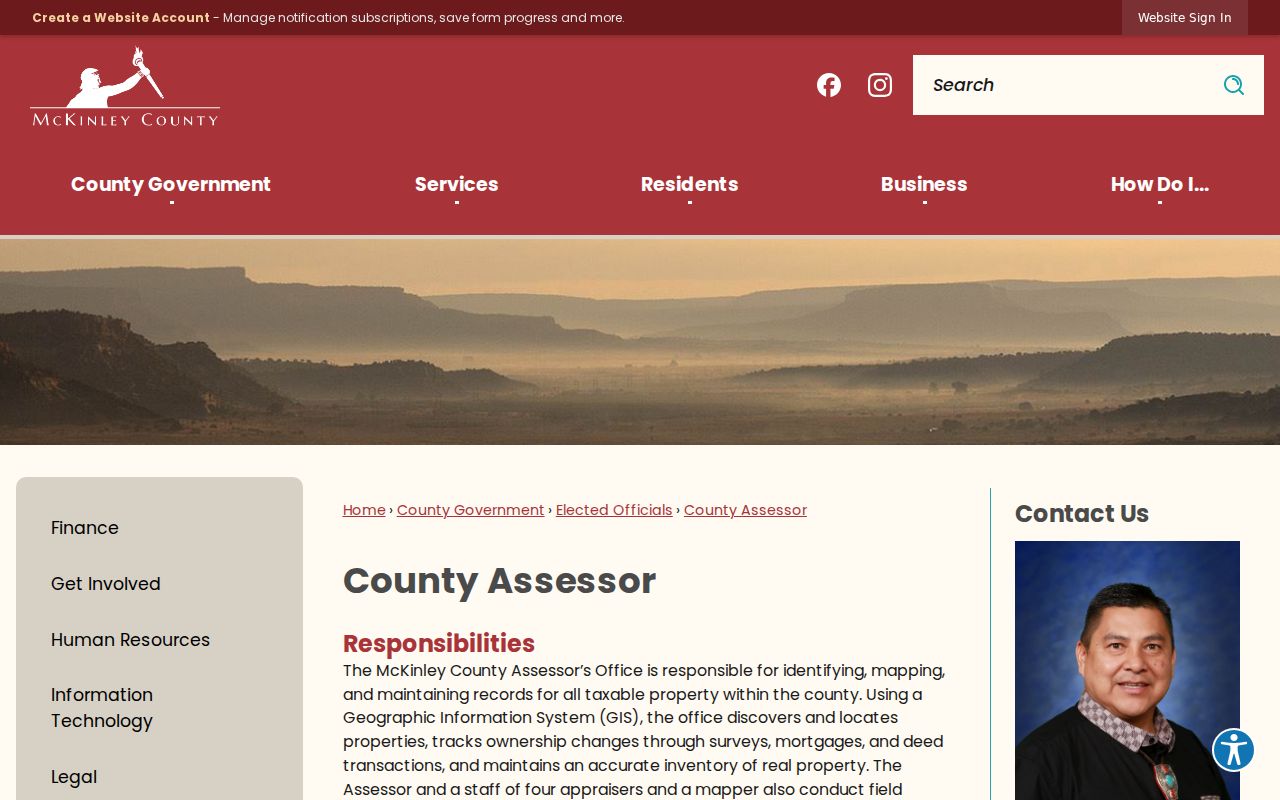
The Gallup-area Assessor maintains taxable-property records, legal descriptions, and GIS-linked property inventory, which is why its records are the first address-to-parcel step.
| EagleWeb field | Entry type | Address use | Limit to keep in mind |
|---|---|---|---|
| Account ID | Optional text | Reopen a known tax account | It is an account reference, not a resident identifier. |
| Owner Name | Optional text | Last name, first name discovery search | A name label does not prove present residence or title. |
| Parcel Number | Optional text | Bridge from an account to Clerk research | Enter it without dashes. |
| Situs house number, street, designation | Address fields and menu | Find the physical street location | Include direction, street type, and unit only when known. |
| Sort by | Dropdown | Order a bounded result by situs, ZIP, legal, parcel, balance, or owners | Sorting does not create an official resident list. |
EagleWeb also separates directional controls and offers a street-type menu. That small form detail matters in Gallup, where a broad Gallup street entry can return many accounts. Narrow first, then broaden a Gallup search only when a spelling or designation is uncertain.
Note: The portal has no posted year-based index cutoff, and its prior-year value notice does not reveal the depth of any deed or occupancy history.
Place a Gallup Street on the Map
Gallup city and county GIS are valuable for record geography. Gallup's GIS data page identifies Address Points, Road Centerlines, City Limits Boundary, and Zoning Map layers. McKinley County GISC maintains E-911 address and mapping data and coordinates with Gallup addressing personnel. Those sources can test whether the Gallup street spelling, road location, or jurisdiction makes sense before a request goes to the wrong custodian.
Gallup's public Web Maps hub is the city entry point for available map resources.
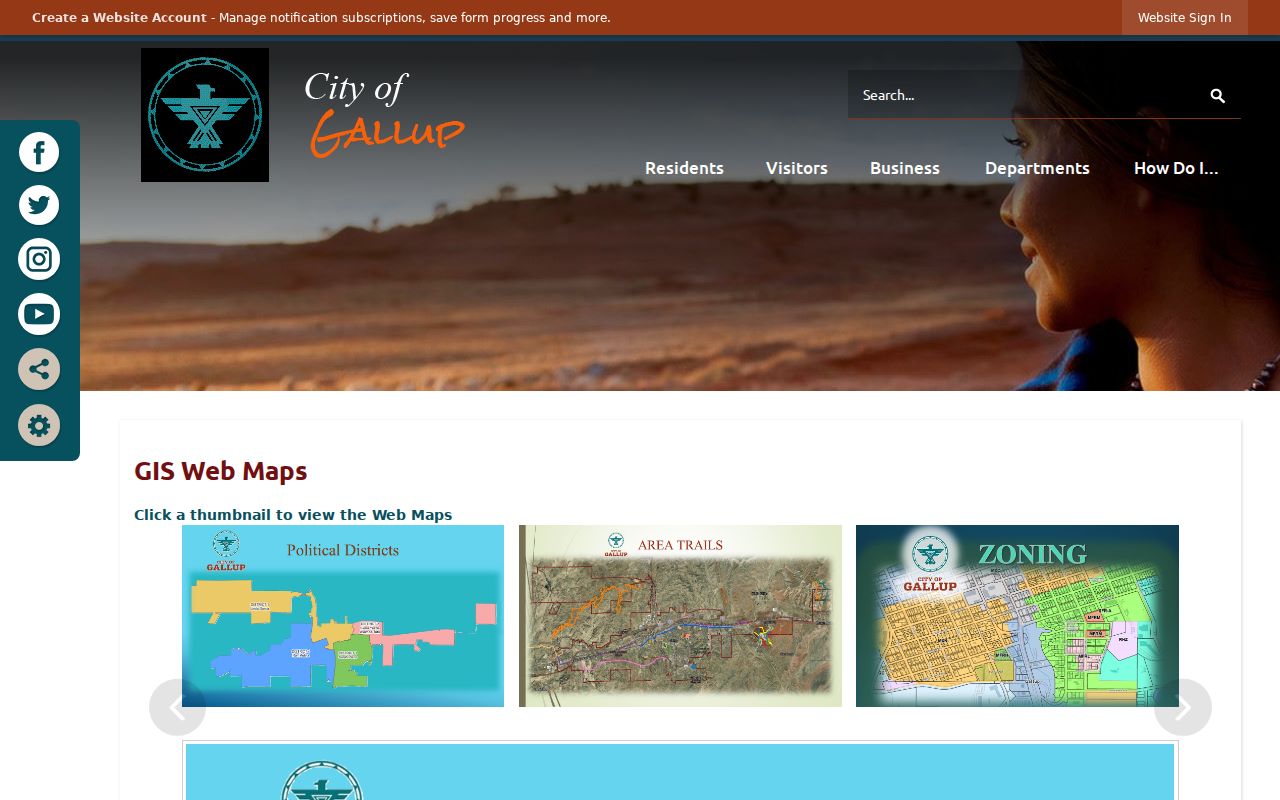
Use the Gallup map hub to understand street and boundary context, then return to EagleWeb for the taxable account and to the Clerk for a recorded instrument.
McKinley County's rural-address guidance uses distance-based numbering and may change when an entrance moves, a corner lot changes access roads, or odd and even sequencing needs correction. That is useful for unincorporated Gallup-area county locations. It is not evidence of a documented Gallup city renumbering event.
The City GIS data page names the layers available for a Gallup street check.
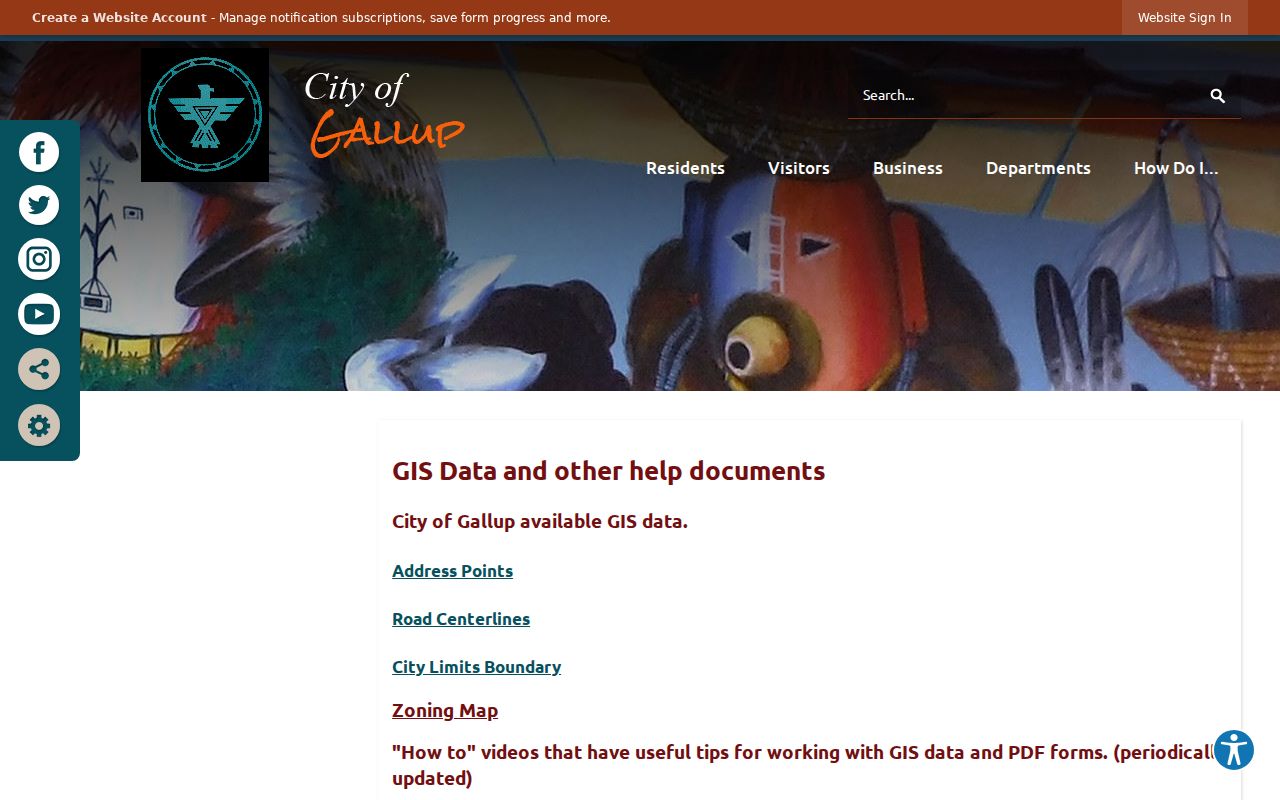
Layer date and source matter. No official Gallup city parcel-owner viewer, adjacent-parcel guide, or owner-name map search was found in the reviewed Gallup interface.
McKinley County GISC explains its E-911 and county mapping role.
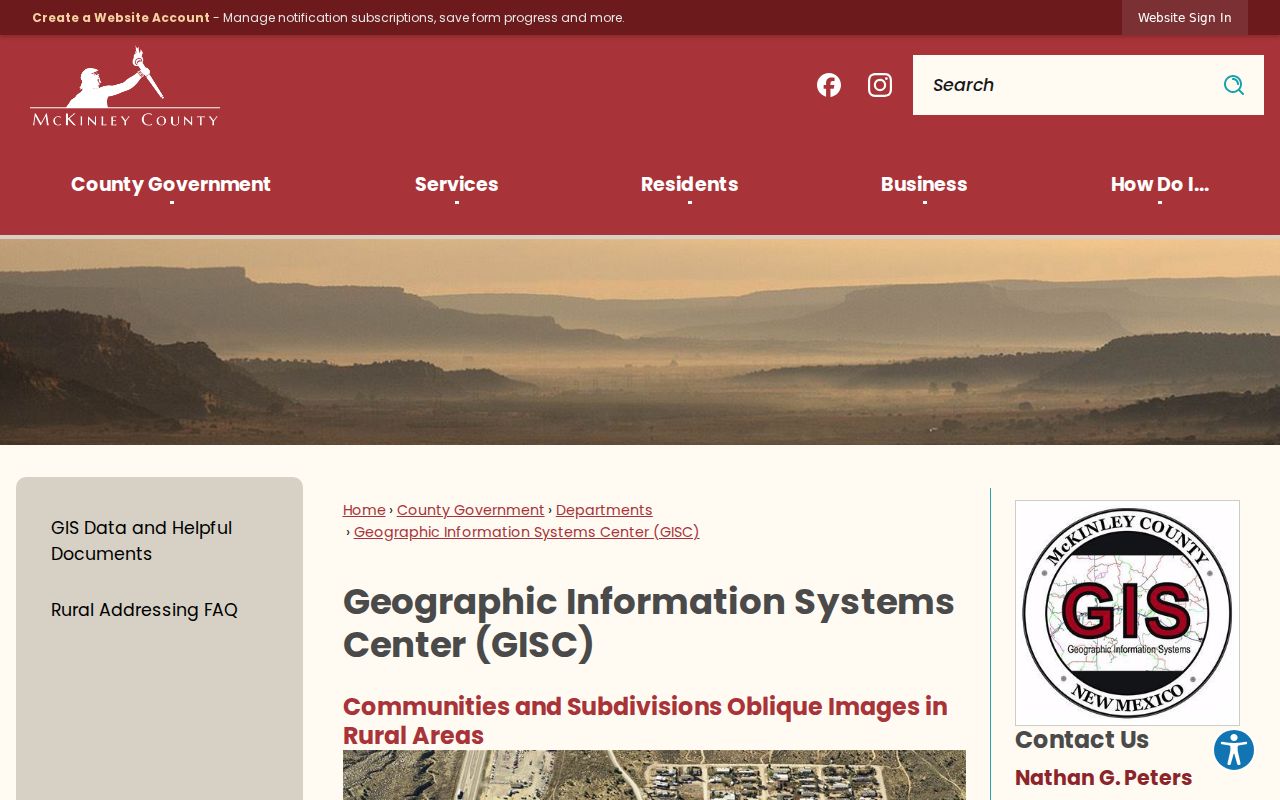
County GIS supports Gallup-area address and road context, especially outside the city, while title and ownership questions remain with the property and Clerk records.
Know Gallup Street Record Terms
Address records use several terms that look alike but answer different questions. Reading them separately keeps a Gallup street directory search from turning one taxable account into a claim about an entire home or block.
- Parcel
- A defined piece of land used in assessment and recorded land descriptions. It can contain more than one structure or address point.
- Situs address
- The physical location associated with a tax account. It is not necessarily a mailing address and does not establish occupancy.
- Plat
- A recorded map or survey that can depict lots, blocks, and subdivision layout. The County Clerk records plats and surveys.
- Legal description
- The land-description language used to distinguish property in a recorded document. It is often more durable than a street label.
- Criss-cross directory
- A reverse-style directory arranged around addresses when a repository holds one. No Gallup run or year range was officially verified, so ask library staff rather than assuming coverage.
For older Gallup address context, Gallup's formal grid developed along the railroad corridor later associated with Historic Route 66. Historic maps, plats, and dated directories can help explain a past Gallup street setting, but the research found no official local renumbering crosswalk. Treat any unverified conversion as a gap.
Note: A legal description or recorded plat can outlast a changed street label, but it still needs a document date and custodian check.
Compare Gallup Street Directory Sources
One source rarely resolves a Gallup address question. The records below are keyed to address, parcel, road, or a focused request, and each has a different custodian. Gallup City and McKinley County channels are especially important because no official online McKinley grantor-grantee index or Gallup permit-by-address database was located.
| Address record | Gallup or McKinley custodian | Street-level context | Confirmed access channel |
|---|---|---|---|
| Tax account | Treasurer / Assessor | Account, parcel, situs, legal description, prior assessment context | Free EagleWeb guest search; Assessor assistance |
| Road and boundary layers | City GIS and County GISC | Address points, road centerlines, city limits, zoning, rural-address context | Web/data pages, staff contact, or a specific layer request |
| Deed, plat, survey, or lien | McKinley County Clerk | Recorded instrument and legal-description trail | Counter, phone, email, or focused request; no public online index verified |
| Permit, inspection, or code file | City Clerk / Planning / Code Enforcement | A named city record for a precise address and date range | Application pages, department inquiry, or City IPRA request |
| Historic street context | Library, archives, and map repositories | Dated map or directory evidence | Librarian request, catalog, archives, or Library of Congress map collection |
The full street-by-street chain starts with the account and ends with the custodian record. When a question becomes about a particular person rather than an address, the Gallup resident lookup route calls for a separate, identity-aware review.
Read Gallup Street Results Carefully
The McKinley County Assessor says roughly 80 percent of county land is Indian Reservation land or other nontaxable federal land. That local fact changes how a missing Gallup-area EagleWeb result should be read. A tax-account search can be a strong clue for taxable property, yet an absent account does not prove a Gallup address is false, a community is absent, or a person has no legitimate connection to the area.
Check the exact delivery address, city-limit layer, county or rural jurisdiction, and the appropriate sovereign or federal custodian where applicable. A postal city label and a municipal boundary are not the same thing. City Hall's physical street address uses one ZIP while the city publishes a different P.O. Box ZIP for mail, which is a useful reminder not to turn a ZIP into a jurisdiction finding.
Note: A tax-account owner label, a business entity, or a historical directory entry is evidence to verify, not proof of current residence or identity.
Take a Gallup Street Chain to the Clerk
The McKinley County Clerk records land documents, maps, plats, surveys, legal descriptions, bills of sale, property-tax liens, judgments, marriage licenses, and selected permits. The Gallup office describes recorded documents as permanent public records. For a Gallup address question, bring the parcel and legal description from EagleWeb, the current owner or entity spelling as displayed, an approximate transfer period, and any book, page, or instrument clue already known.
The county did not publish a public internet recording search form or online-index coverage date in the material reviewed. Use the Gallup Clerk's counter, phone, email, or a specific written request instead of promising a remote deed search. County Clerk records may be searched without charge during regular hours under NMSA 1978 §14-8-14; copying, certification, and staff-search charges should be confirmed with the office.
For historical street context, the Library of Congress 1916 Gallup Sanborn map gallery can show period building and street context. It does not provide a complete household roster or a current address directory.
Note: The Clerk does not draft deeds, so a records request should identify an existing instrument instead of asking staff for private legal advice.
Request Gallup Street City Records
Gallup publishes building-permit applications, but the official Gallup pages reviewed did not provide a searchable permit history by address. The same limit applies to Gallup Code Enforcement, whose public page is a reporting channel rather than a case-search index. A focused Gallup City Clerk or Planning request is the better route for a specific permit, inspection, site plan, or code record.
Gallup's permit application hub shows the city application families.
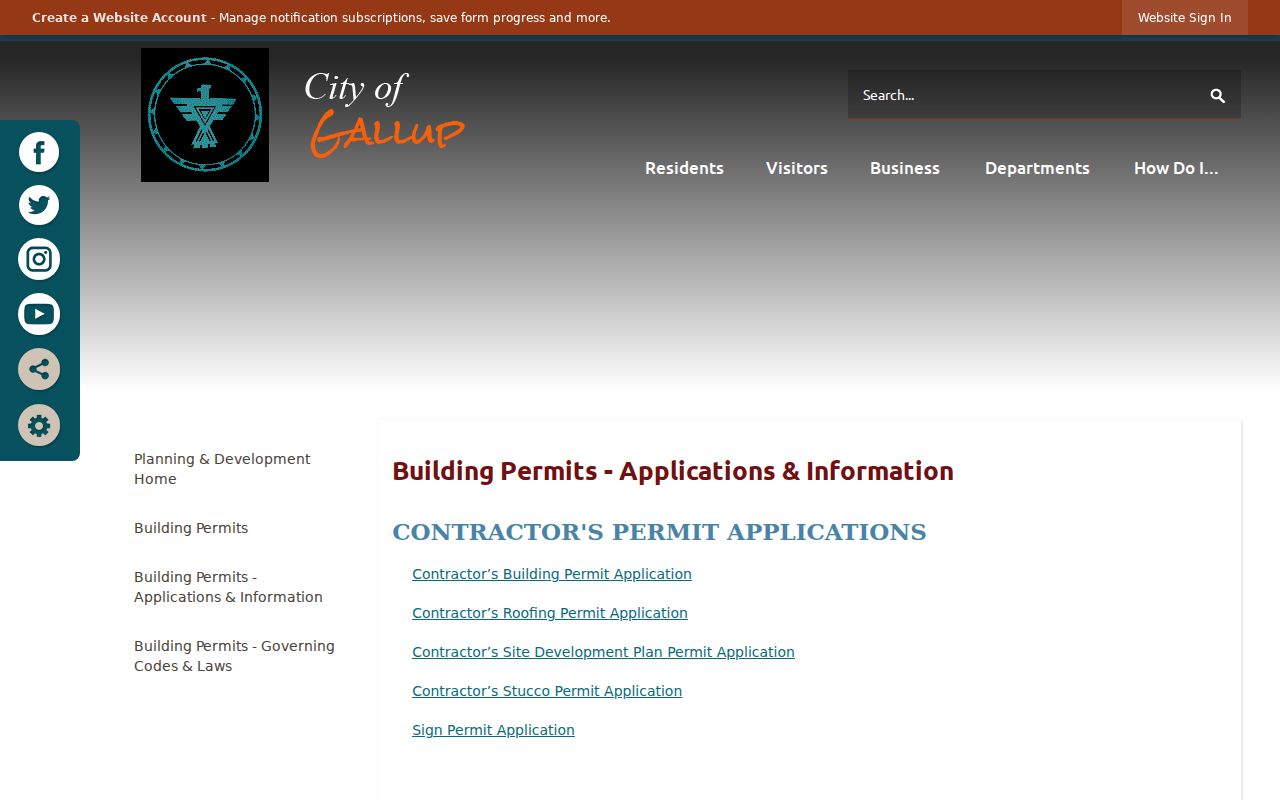
The form page confirms Gallup application access, while a historical-address search still needs a custodian request that names the address, record type, and time window.
Gallup accepts records inquiries through its Inspection of Public Records page. The City Clerk is at 110 W. Aztec Ave. and accepts in-person, mail, email, and fax channels. A written request supplies a traceable record. The city lists ordinary copies at $0.50 per page up to 11 by 17 inches and CDs/DVDs at $5, subject to confirmation for the request.
Keep Gallup Street History Dated
Gallup's grid and rail corridor give an old address useful context, especially near the route later associated with Historic Route 66. The National Park Service describes the nearby Iyanbito-Rehobeth road segment in its regional road history, but that source is not a Gallup street-by-street address index. Pair a historic Gallup map with a dated directory item, a Clerk plat, or a library-held source before making a past location claim.
Octavia Fellin Public Library is the honest local starting point for unverified directory, criss-cross, telephone-directory, obituary, and house-history holdings. Its official site did not list a confirmed Gallup run by year. Ask a librarian for the exact item and access method; the Historic Rex Museum is appointment-only through the library.
Keep the Gallup Street Directory Private
A Gallup street directory cannot establish who occupies every unit, who receives mail at an address, household relationships, protected addresses, or a complete list of people on a block. Multi-unit buildings, mixed-use sites, parcels with several structures, rural spacing, and nontaxable land create ordinary gaps. Do not fill those gaps by combining name strings, old Gallup directories, or address labels into a personal profile.
New Mexico Safe at Home provides eligible participants with a substitute address and mail forwarding. A missing or altered trail may be an intended safety safeguard. The proper response is to respect the protection, use the named custodian for an authorized question, and avoid any attempt to reverse or defeat a protected address.
Lawful use. Gallup street records are for proportionate, lawful research. Do not use an address, parcel, or map result to stalk, harass, intimidate, dox, or harm anyone; New Mexico law includes a stalking prohibition at NMSA 1978 §30-3A-3.