
Gallup City Directory Collection Leads
The documented Gallup city directory trail is useful but incomplete. FamilySearch has a catalog subject result for Gallup, and its national city-and-business-directory collection can contain historical listing material. Gallup City historic-plan excerpts cite a 1940 directory and a 1960 directory. Neither the accessible FamilySearch result nor the city-plan excerpts verified a complete Gallup run with publisher, edition, page, or shelf location. The right first step is to verify the specific item, not to infer a full sequence from these leads.
| Collection lead | Years or scope confirmed | Where held or searched | Access approach |
|---|---|---|---|
| FamilySearch Gallup subject result | Gallup catalog subject record located; item details not verified | FamilySearch catalog | Open the specific item record or ask a librarian to verify it |
| United States City and Business Directories | National collection, about 1749 to 1990; Gallup run not verified | FamilySearch collection | Search name, place, and date range, then inspect the image or citation |
| City historic-plan references | 1940 and 1960 Gallup directories cited | City historic-plan bibliography or source copies | Ask for the exact source copy, publisher, page, and edition |
| Local and state reference routes | Specific directory shelves and microfilm years not published | Octavia Fellin Library and New Mexico State Archives | Submit a focused title, year, surname, or address inquiry |
That gap is part of the Gallup collection record. No complete official Gallup publisher, year, or holding run was independently verified during research. It remains safer to describe a Gallup directory as a confirmed lead until an item-level catalog record, scan, or repository reply supplies the missing details.
Gallup City Directory Catalog Search
FamilySearch's catalog offers Place, Surnames, Titles, Author, Subjects, Keywords, and availability controls. Search with “Gallup,” “McKinley,” a surname variant, and a date window rather than assuming the first Gallup result is the needed volume. The city-and-business-directory collection can hold names, addresses, and other listing material, but coverage, images, and access vary by place and year. A Gallup record index is a useful pointer; its associated page image and citation are the stronger historical evidence.
The searchable city-and-business-directory collection is shown on the FamilySearch source.
For any possible Gallup city directory entry, capture the collection title, item title, stated year, page or image, access note, spelling, and the permanent link if the repository provides one. The Gallup catalog search itself does not establish that every Gallup year is digitized or open.
Note: Preserve a printed street type and directional wording exactly before comparing an old listing to a later address.
Gallup City Directory Library Route
Octavia Fellin Public Library is Gallup's local point of contact for a collection question. Its main branch is at 115 W. Hill Ave., Gallup, NM 87301, and the published phone is 505-863-1291. The City library page also connects researchers with the Historic Rex Museum at 301 W. Historic Route 66, available by appointment through the library. Its posted public hours are Monday, Tuesday, Thursday, and Friday 10 a.m. to 6 p.m.; Wednesday 11 a.m. to 7 p.m.; Saturday noon to 5 p.m.; and closed Sunday and holidays.
The library's official home and catalog route is visible on the Octavia Fellin Public Library source.
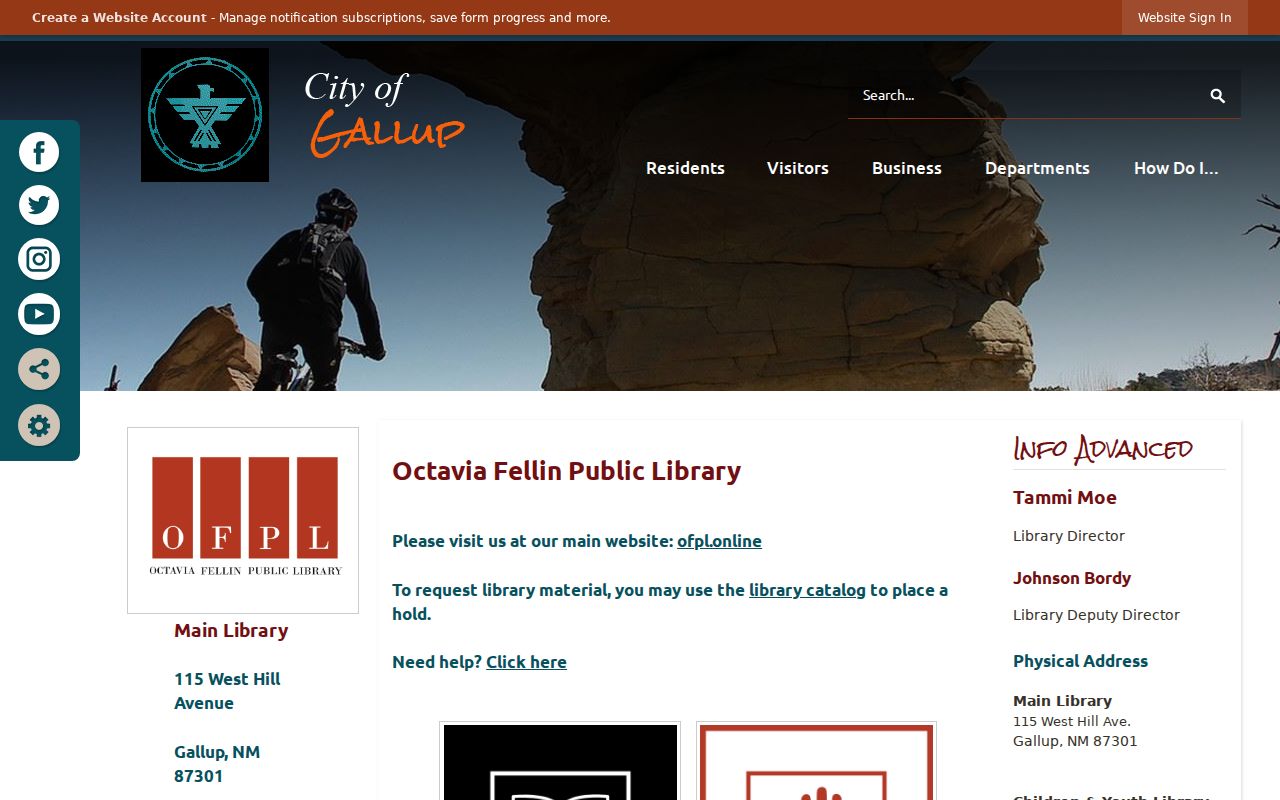
Ask a narrow Gallup question: whether a titled city directory, telephone book, local newspaper, clipping file, school yearbook, or vertical file is on site, in storage, or on microfilm. The public site did not publish directory, reverse-directory, obituary, or microfilm years. A Gallup library event about research instruction is not proof of a current subscription or a particular Gallup holding.
Gallup City Directory Years in History
Gallup's local history helps interpret a dated Gallup directory without manufacturing a publication history. Gallup City historical materials place the railroad founding in 1881, incorporation in 1891, and the county-seat role in 1901. They describe a formal grid along the railroad corridor that later became associated with Historic Route 66. That history can explain why a printed Gallup street form or commercial block looks different from a modern map, but it cannot identify a resident or fill an unverified directory year.
| 1881 | City historical material describes Gallup as an Atlantic and Pacific Railroad railhead. |
|---|---|
| 1891 | Gallup incorporation is cited in the city historical material. |
| 1901 | Gallup became the McKinley County seat. |
| February 1916 | The Library of Congress dates the Gallup Sanborn map set to this month. |
| 1940 and 1960 | City historic-plan excerpts cite Gallup directories for separate historical contexts, without publisher, page, or holding details. |
These are supported reference points, not a list of first, last, or continuous directory years. Retrieve the historic plan's bibliography or source copies before stating where a cited 1940 or 1960 volume is held.
Reading a Gallup City Directory Entry
A historical Gallup city directory entry should be read as a piece of dated source evidence. The research did not verify a uniform Gallup edition or abbreviation key, so never fill in fields that the actual image does not print. Instead, transcribe the visible wording and pair it with the Gallup item details. A name can have spelling variants; an address can use an earlier street form; and extra text may be an occupational, business, household, or abbreviation notation whose meaning belongs to that volume's own key.
| Principal name | Copy the printed name exactly, then note variants separately. |
|---|---|
| Address text | Capture number, direction, street, type, and unit or block wording exactly as printed. |
| Additional printed text | Preserve any occupation, business, household, or notation only if the item actually displays it. |
| Source details | Record repository, title, publisher if printed, year, page or image, and access date. |
| Interpretive note | Separate the transcription from a conclusion about a later address or person. |
- Criss-cross directory
- A street-order directory format that may help connect addresses and listings when a specific volume includes one. No official Gallup criss-cross run was verified.
- Householder index
- An index organized around heads of households or households when a repository's item uses that structure.
- Abbreviation key
- The volume's own explanation of shortened printed terms. Photograph or transcribe it with the entry when it exists.
Gallup City Directory Map Context
The Library of Congress 1916 Gallup Sanborn map set has eight sheets and is public domain. It can supply historical Gallup block, building-footprint, street-label, and land-use context for a dated city directory address. It is not a household roll. Pair a Gallup map with a directory image, recorded instrument, census record, newspaper, or archival source before linking a building to a named person.
The 1916 Gallup map collection is one part of the historical address trail. Its source page should be saved with the consulted sheet and access date.
Modern address and parcel work belongs with the current government sources rather than an old map. When a historical address needs a present-day property context, the Gallup by-street reference explains the EagleWeb and County Clerk sequence without replacing the dated city-directory evidence.
Gallup's municipal label, postal label, county geography, and tax-account situs can overlap without being identical. Do not apply a current city boundary to an older listing without confirming the period, address form, and governing geography.
Gallup City Directory Archive Research
New Mexico State Archives is a useful second institutional route when a local Gallup catalog search does not resolve an item. Its Heritage Search gateway and New Mexico Archives Online finding aids can be searched for McKinley, Gallup, a surname, or a record group. The archives describes its holdings as spanning 1621 to the present and includes county records from 1850 to 1912, census records, published family histories, and genealogy materials. It offers Gallup researchers reference access on site and by phone, mail, and email.
The archival finding-aid gateway is shown on the New Mexico Archives Heritage Search source.
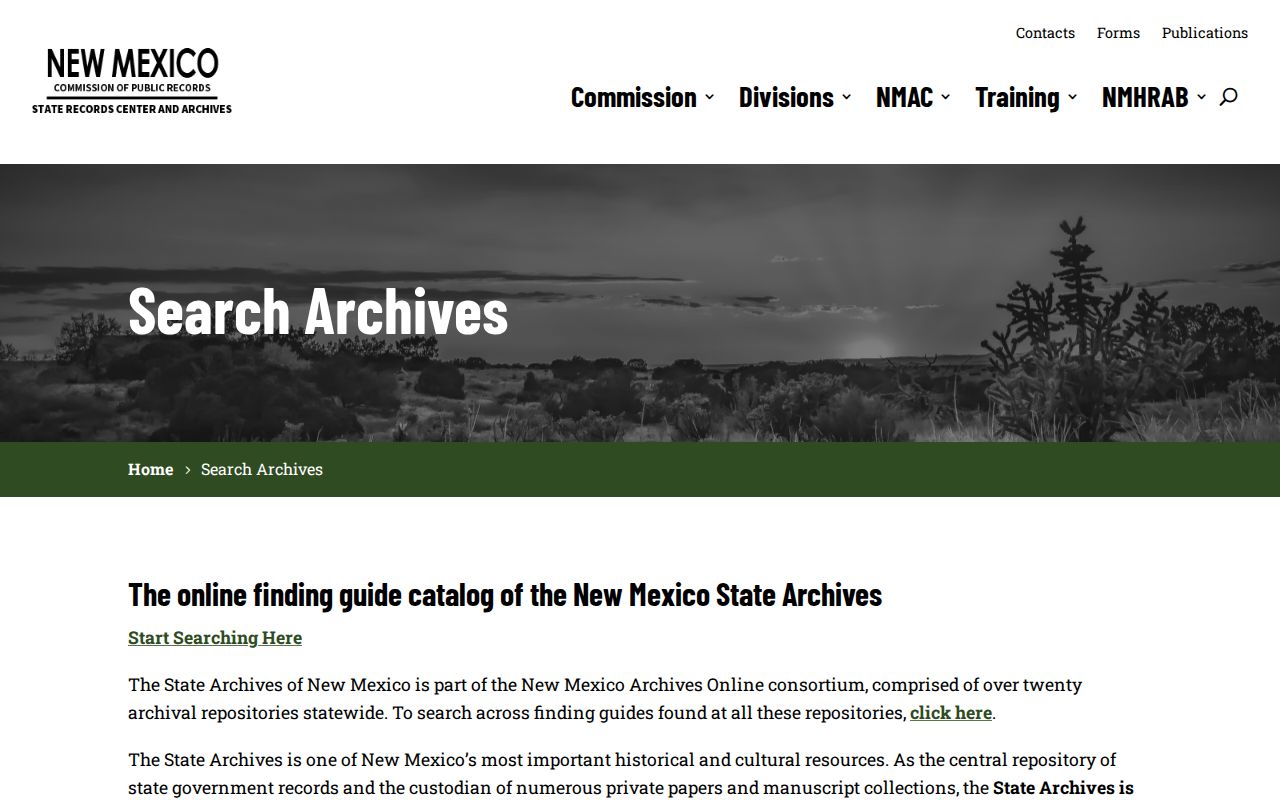
Send an archivist a focused inquiry with the exact question, place, year range, surname variants, and known collection or item clue. A response about county or genealogy material is a route to investigate, not proof that the archives holds a specific Gallup city directory volume.
The State Archives public-access information appears on the New Mexico State Archives source.
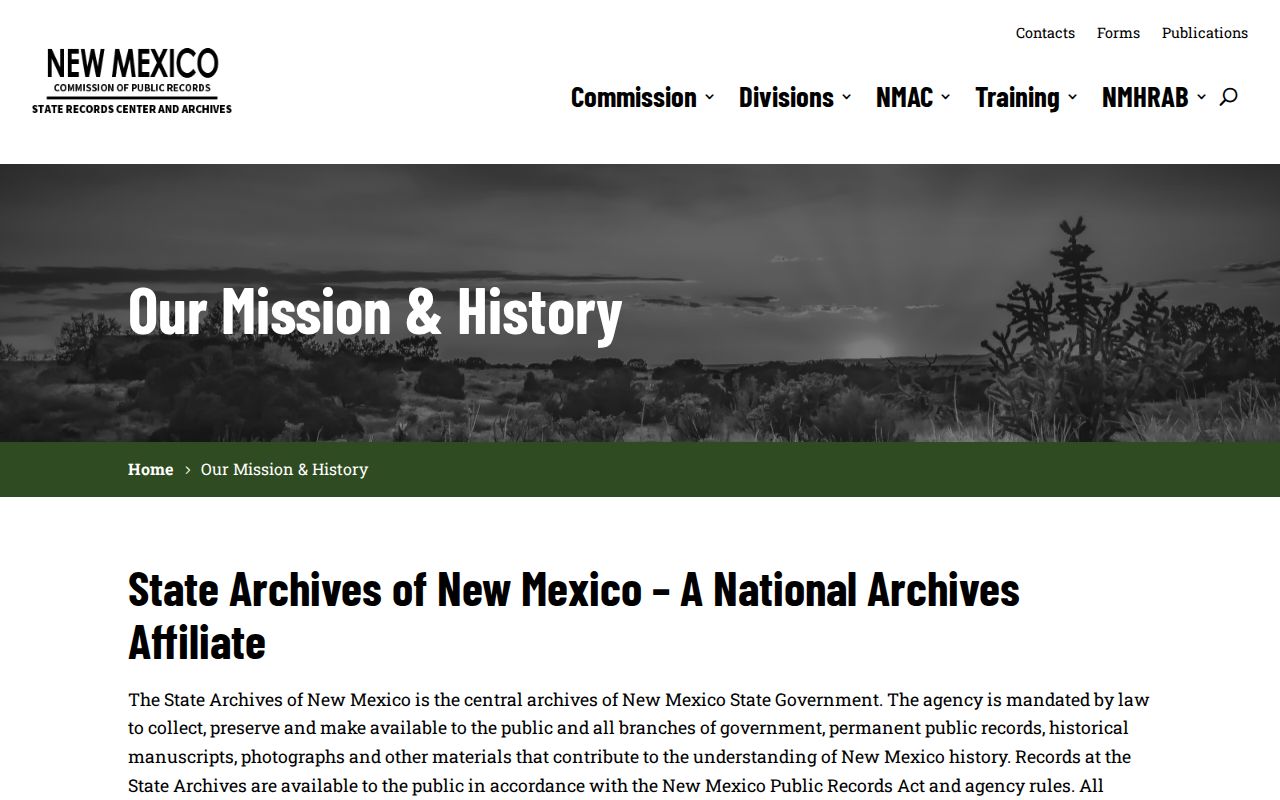
Use the archive route to verify repository, scope, and access conditions. It complements the Gallup library inquiry rather than replacing the need to inspect a specific dated item.
Tracing Gallup City Directory Households
Trace a historical Gallup household one dated source at a time. A Gallup directory listing may show a name and address for that edition, while a Sanborn sheet can clarify the block and a census image can place a household on a federal census date. Do not smooth over a gap by assuming a family remained at one address. A person may have used a variant name, lived beyond taxable land, appeared in an unscanned volume, or been omitted from that directory's coverage.
- Set a target person, address, and time window, then keep the spelling and street form exactly as first found.
- Locate a dated city-directory image or catalog item and save the repository, title, year, page or image, and access date.
- Search adjacent plausible years and name variants, recording both hits and verified gaps instead of assuming a continuous run.
- Compare the address to the 1916 Sanborn maps, plats, GIS context, or a recorded instrument when those sources fit the date.
- Pair the appropriate directory period with a released federal census image, noting that 1950 is the newest released census under the 72-year rule.
- Ask the County Clerk, library, or archivist for the next specific record rather than requesting a broad personal compilation.
This method makes a city directory useful for family history, estate context, and local history while keeping each date and source boundary visible.
Gallup Directory Gaps at NARA
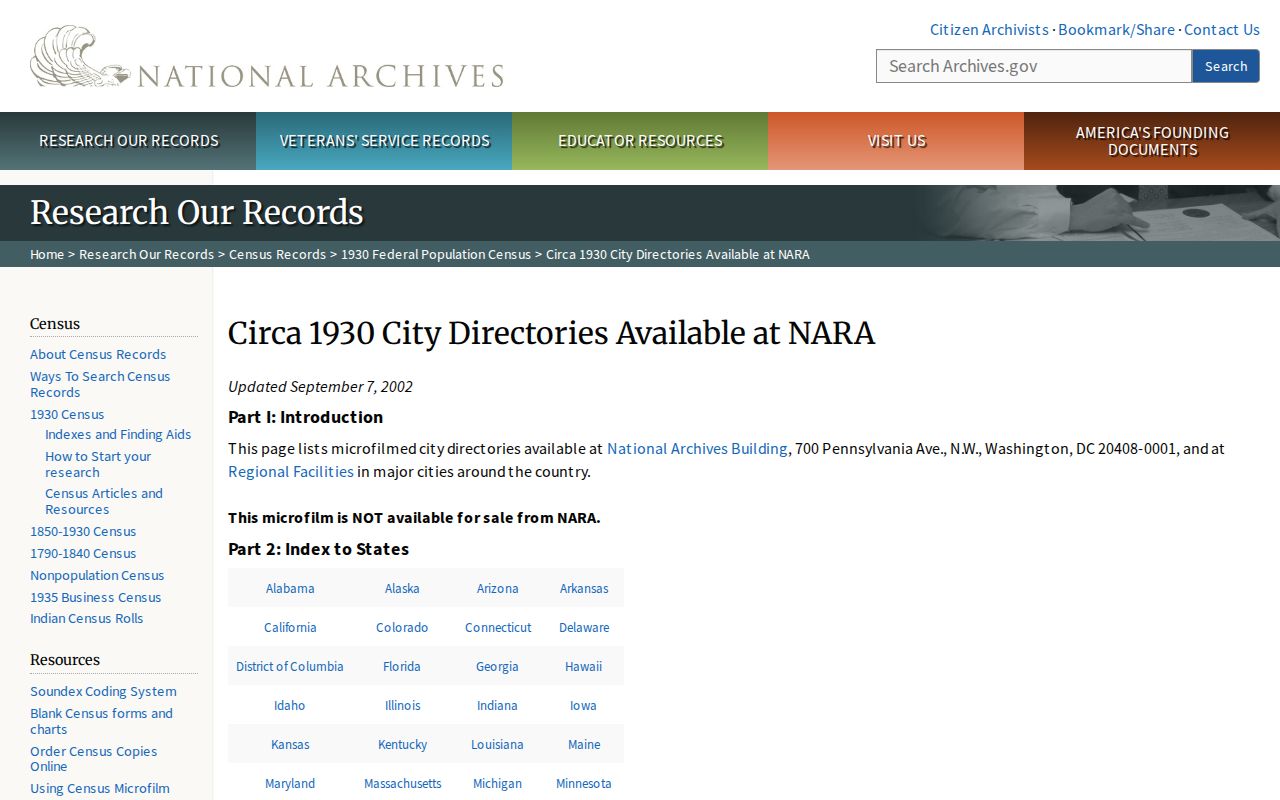
The National Archives publishes a guide to its 1930 city-directory holdings. Gallup is not listed in that published holdings list. That is an important Gallup negative finding: the National Archives guide should not be presented as a confirmed Gallup city directory collection. It also does not prove that no Gallup volume survives elsewhere. FamilySearch, the Gallup library, City historical sources, and State Archives remain the responsible follow-up channels.
The National Archives 1930 holdings guide is visible on the official NARA source.
A missing directory entry also has several possible explanations: the issue may not have covered the area, the listing may have used a different name or street spelling, the item may be absent from an index, or the person may not have been included. Treat the absence as a documented research result, not a conclusion about a household.
Citing Gallup City Directory Findings
A citation makes historical Gallup directory work checkable. Keep the repository name, item or collection title, city, edition year, publisher if printed, page or image number, the exact Gallup entry transcription, and the access date. If an image cannot be viewed directly, say that the source is a catalog lead or a repository confirmation rather than presenting a reconstructed listing as if it were a page-level record.
When a directory detail conflicts with a later property, census, or court source, preserve both dates and ask what each source was designed to show. A directory captures a publication-time listing. A map supplies spatial context. A county instrument records a specific transaction. Putting them in order is more reliable than turning any one of them into a complete history.
Note: Gallup directory research remains strongest when the repository, item, date, and page can be checked by another reader.